Picture this. You’re on a family road trip. Suddenly, a tire blows out because the pressure sat too low. That flat could have waited if you’d checked the sidewall markings right.
Tire sidewalls hold key info. They guide you to the correct PSI for safety, better gas mileage, and even tire life. Beginners often skip these stamps. They think PSI comes from guesswork. It doesn’t.
This guide breaks it down. You’ll learn what markings mean. You’ll spot the right numbers fast. Plus, you’ll get steps to match them to your car. Master this skill. You’ll drive with confidence.
What Tire Sidewall Markings Tell You at a Glance
Sidewall markings act like a tire’s ID card. They sit right on the rubber side. You see them when the wheel turns. These stamps pack details on size, limits, and safety specs.
Manufacturers etch them deep. They stay readable for years. Ignore them, and you risk blowouts or poor handling. Read them, and you stay safe on the road.
Key parts pop out quick. Tire size leads the pack. Then comes max PSI, load index, and speed rating. The DOT code hides tire age too. All tie back to proper inflation.
Think of markings as a cheat sheet. They prevent over or under inflation. That keeps your tires gripping well. It boosts fuel economy as well.
Spotting the Most Important Markings First
Start on the outer sidewall. That’s the side facing away from your car. Light hits it best there. Rotate the tire if needed.
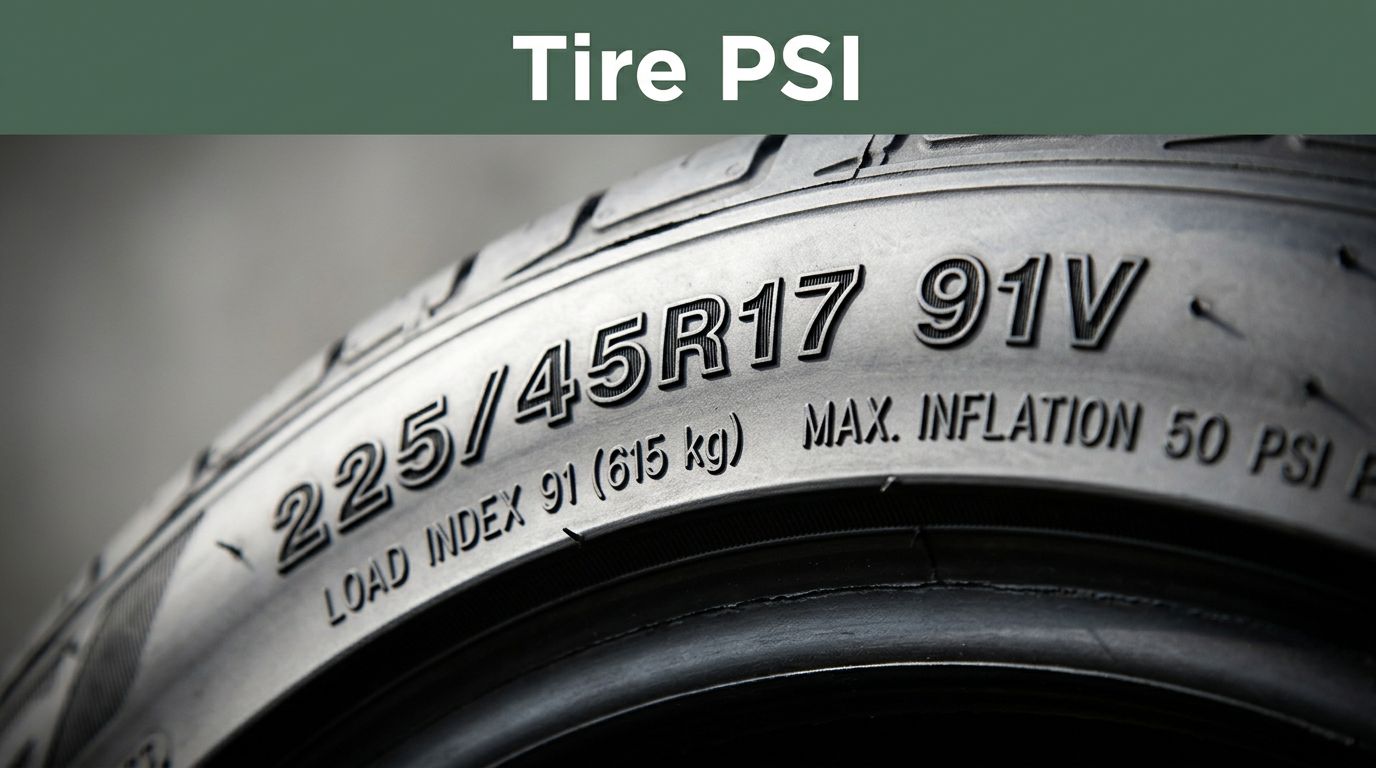
Look for the size code first. It might read P215/65R16. P means passenger tire. 215 is width in millimeters. 65 shows sidewall height as percent of width. R means radial build. 16 is rim diameter in inches.
Next, spot max PSI. It often says “Max Load 670 kg at 44 PSI” or just “44 PSI Max.” This caps safe pressure. Don’t pump beyond it.
Service description follows size. Like “94H.” 94 means load index. H is speed rating. You’ll decode those next.
Chalk or a phone flashlight helps in dim garages. Write numbers down. Compare later.
Max Load and Speed Ratings Explained Simply
Load index tells max weight per tire. A 94 rating handles 1,477 pounds. Check charts for exact pounds. Multiply by four for your car’s total.
Your sedan might need 90 or higher. Trucks demand more, like 110. Pair this with PSI. Low pressure drops load capacity fast.
Speed rating limits top speed. H means 130 mph. S tops at 112 mph. V hits 149 mph. Most drivers pick H or T for daily use.
Mix ratings on one car? Stick to the lowest. It keeps handling even. Exceed it, and tires overheat.
Real example: Your SUV has 225/65R17 102T tires. 102 supports 1,874 pounds each. T limits you to 118 mph. Inflate to spec. You’ll haul safely.
Unlocking the Recommended PSI from Your Sidewall
Sidewalls show max PSI. That’s the upper limit. Your car needs less most days. Recommended PSI comes from elsewhere.
Check the driver’s door jamb. A sticker lists front and rear pressures. Look in the owner’s manual or glovebox too. Fuel door sometimes holds it.
Say your sidewall maxes at 44 PSI. Sticker calls for 32 front, 35 rear. Use those. Max PSI stiffens the ride. It wears centers fast.
Cold tires need exact numbers. Heat builds pressure 1 PSI per 10 degrees. Check mornings before driving.
Correct PSI improves cornering. It evens tread wear. You save on gas too. Underinflation burns 3% more fuel.
Max PSI vs What Your Car Actually Needs
Max PSI suits heavy loads only. Daily driving wants 28 to 35 PSI typical. Overdo it, and tires ride harsh.
| Marking Example | Max PSI | Recommended (Sedan Sticker) | Notes |
|---|---|---|---|
| P215/65R16 | 44 | 32 front, 35 rear | Cold check |
| LT245/75R16 | 80 | 35-40 (truck) | Load adjusts up |
| 225/50R17 | 51 | 33 all around | Sports car |
This table shows the gap. Always trust the vehicle sticker. It factors weight and suspension.
Temperature sways numbers. Cold fall mornings drop PSI. Hot summer swells it. Adjust then recheck.
Load matters. Pack the trunk? Add 2-4 PSI rear. Unload after. Reset to normal.
DOT Code and Age: Fresh Tires Matter Too
DOT code starts with letters. Last four digits count. “0T5X” means week 15 of 2020.
First two are week. Last two are year. Tires over six years old weaken. Cracks form inside. Replace them, even if tread looks good.
Tie this to PSI. Old rubber holds air poor. Check pressure weekly on aged sets. It prevents roadside stops.
Buy new? Ask for recent DOT. Stores track stock. Fresh tires grip better at right PSI.
Your Easy Step-by-Step Guide to Reading Sidewall Markings
Park on level ground. Turn off engine. Let tires cool overnight.
Grab a gauge and notepad. Inspect all four sidewalls. Note size and max PSI.
Find your placard. Match tire size if needed. It lists PSI per position.
Pump or deflate to match. Recheck after two minutes.
- Park safely. Use wheel chocks. Engage parking brake.
- Inspect visually. Look for damage first. Note sidewall stamps.
- Read size code. Write P215/65R16 or similar.
- Find max PSI. Ignore it for now.
- Check vehicle sticker. Use those PSI numbers.
- Measure current. Press gauge firm on valve.
- Adjust air. Add if low. Bleed if high.
- Verify. Drive short. Recheck hot.
Practice on your car. It takes five minutes weekly.

This view points out size, PSI, and DOT clear.
Tools You Need and How to Use Them Right
Buy a digital gauge. It reads to 0.5 PSI. Analog works cheap too.
Get a portable compressor. Plugs into 12V outlet. Skip gas station air sometimes.
Calibrate gauge monthly. Press on zero if analog. Test on known tire.
Check cold always. Mornings best. Deflate slow with valve tool. Don’t guess.
Store tools in trunk. Set phone reminder monthly.
Pitfalls Beginners Make and Smart Fixes
Newbies pump to max PSI. It feels firm. But it cuts traction.
Others check hot tires. Pressure reads high. They deflate too much.
Ignore load ratings. Haul heavy? Tires fail underweight.
Fix with routine. Check first of month. Note seasonal drops in winter.
Apps remind you. Adjust 1 PSI per 10-degree cold snap.
Correct PSI lasts tires 20,000 miles more. Handling sharpens too.
Signs Your PSI Is Off and Quick Fixes
Underinflated sides bulge. Tread wears edges. Car pulls or wanders.
Overinflated centers bald fast. Ride bumps hard.
| PSI Issue | Signs | Fix |
|---|---|---|
| Too Low | Bulge, edge wear | Add air slow |
| Too High | Center wear, harsh | Bleed valve cap turns |
Spot these monthly. Adjust on site. Drive safer right away.
Fuel economy dips 0.2 MPG per PSI off. Fix it. Save cash.
Tires hum loud when wrong. Listen on highway.
Master markings. Avoid these traps easy.
Proper pressure ties it all. Sidewalls guide you there. Vehicle stickers set the target.
Check today. Grab your gauge. Note those numbers.
You’ll spot issues early. Safer trips follow. Share this with friends. They need it too.
Drive on, pressure perfect. Your tires thank you.